 What's On HK

 Eat & Drink
 Travel

 Style
Style

 Beauty
 Health & Wellness

 Home & Decor
 Lifestyle

 Weddings

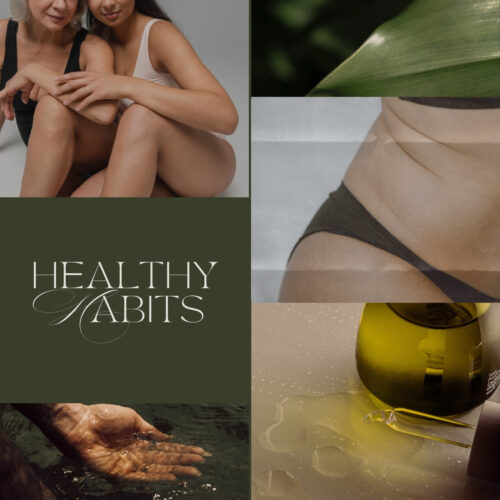
We sat down with TCM practitioner Gigi Ngan and trauma therapist Emily Kusunoki to talk burnout, women’s health and daily habits that can help you heal.
Between Hong Kong grind culture and influencers peddling miracle supplements, pursuing wellness can feel aimless. But don’t be discouraged by the scams and the noise — simple, actionable stress-relief exists, and it’s worth prioritising.
Ahead of their talks at TEDxTinHau Women ‘Reframe’ 2025, two leading voices in women’s health are sharing their essential advice. Gigi Ngan, a registered Traditional Chinese Medicine (TCM) practitioner, focuses on supporting women through all life stages by integrating ancient wisdom with modern science. Alongside her is Emily Kusunoki, a trauma therapist at the Hong Kong Dignity Institute, specialises in empowering women to heal from anxiety, depression and trauma.
Together, these experts represent an integrated approach to well-being. Keep reading to discover their essential tips on how to reclaim you calm in ways that last.
Read More: Alternative Therapy In Hong Kong — Reiki, Energy Healing & More
In your practice, what are the most common barriers you see that prevent women in Hong Kong from finding a sense of calm?
Gigi Ngnan (GN): Long work hours, late messages and the pressure of stacked roles — professional, partner, caregiver — create a constant ‘on’ switch. This is compounded by lifestyle factors like irregular meals and sleep, along with care can being fragmented between different providers. Many believe they must choose between Eastern or Western medicine instead of seeking integrated help.
Emily Kusunoki (EK): I see disconnection as the primary barrier. Despite vastly different backgrounds, my career-driven clients who lacked contentment and the refugees and survivors of trafficking I work with now share a common goal: to reconnect with their own needs, wants and desires. Trauma and societal pressure disconnect us from our ability to hear ourselves. When we rely on external sources to tell us how to live, we aren’t able to connect to our own inner voice.
Read More: Therapists & Psychologists In Hong Kong For Counselling
The mind and body are deeply connected. How does chronic stress or emotional turmoil typically manifest in a person’s physical health and overall well-being?
GN: It very often appears through clear physical signals: disrupted sleep, digestive swings, headaches, skin flares and noticeable changes in the menstrual cycle — its timing, flow or cramps. From a TCM lens, we see patterns like constrained energy flow or depleted reserves; from a Western lens, it’s nervous-system overdrive and hormonal shifts. The crucial point is that the body signals distress long before it fully breaks down.
EK: Therapeutic models like EMDR show how unprocessed trauma can leave us feeling anxious or tense. IFS explains how protective parts of us can cause muscle tightness or chronic fatigue. Polyvagal theory helps us understand how stress disrupts the nervous system, keeping us in ‘fight or flight’ or a shutdown state, manifesting as a racing heart, stomach troubles or numbness. It’s a gift that our body remembers even when our mind forgets — it reminds us that healing involves finding ways to feel safe internally.
Read More: A Gweilo’s Guide To Chinese Herbal Teas In Hong Kong
“Listening to the body” is a popular phrase. What does that mean in a practical sense? How can we start to honour our body’s signals while managing our responsibilities?
GN: Run a simple 60-second daily check-in. Ask yourself: How did I sleep? Where do I feel tension? What’s my energy level? If relevant, where am I in my cycle? Jot brief notes in your phone. Once a week, scan for patterns and commit to one small, sustainable adjustment — whether it’s turning off lights 30 minutes earlier, ensuring a proper lunch break or taking a short walk after dinner.
EK: Practically, it means pursuing connection. This can start by telling just one trusted person — a friend, a sibling, even a stranger at the park — what you’re truly experiencing or struggling with. When we give words to an invisible battle, it holds less shame over our lives and lightens the weight of isolation. This act of expression is a powerful first step in honouring what your body and mind are telling you.
Read More: Medical Misogyny — What Is It & How To Tackle It
For women who may be hesitant to seek professional help, what is a gentle, first step they can take on their own to begin understanding and supporting their well-being?
GN: I suggest a two-week personal experiment. Focus on regular mealtimes, a consistent bedtime, just 10 minutes of daylight movement and a two-minute slow-breathing practice. If you feel even slightly better, use that positive momentum to book a baseline medical check and a TCM consultation — use both perspectives to map out where you are and create a informed plan forward.
EK: My favourite go-to is Progressive Muscle Relaxation because it’s simple and effective. You can start from your head or your toes, slowly tensing each muscle for a few seconds and then releasing. Incorporate deep breathing, inhaling as you tense and exhaling as you release. Do this for as many muscle groups as you can; I guarantee you will feel a difference in your body by the end.
Read More: Traditional Chinese Medicine Clinics In Hong Kong
When feeling overwhelmed or anxious in the middle of a stressful day, what is one immediate, in-the-moment technique you recommend to help ground herself and find her centre?
GN: Try a one-minute acupressure reset. First, press the Neiguan point (PC6) on the inside of your forearm, about three finger-widths above the wrist, while you take five slow, deep breaths. Then, gently circle the Yintang point between your eyebrows for 20 seconds. Finish with a few mindful sips of warm water to settle your energy.
EK: Honestly, never underestimate deep breathing. You can practice a simple technique like box breathing anywhere: inhale for four seconds, hold for four, exhale slowly for four and hold again for four. Repeat this cycle just three times to instantly calm and centre yourself. Don’t overlook the small, regulating gifts your body already equips you with.
Read More: Essential Health Check-Ups Every Woman Should Schedule
Beyond crisis moments, what is one non-negotiable daily ritual you believe every woman should incorporate to support her nervous system and build long-term resilience?
GN: Start the day warm. This means having a warm drink — plain water, ginger or lemon tea — and a warm breakfast if possible. In TCM, warming the body’s ‘centre’ is foundational; it supports healthy digestion, stabilises mood and sustains energy for the rest of the day.
EK: Pay greater attention to your senses. This means mindfully eating one bite of food, noticing how your chair feels under you or gently patting your arms. Reconnecting with touch, smell, taste, sound and sight builds your introspection — your awareness of internal sensations — which is vital for understanding your needs and feeling grounded. Honour these signals by giving them attention.
Read More: The Top Yoga Classes & Studios In Hong Kong
Self-criticism is a major obstacle to calm. What is a powerful way to challenge a negative inner voice and cultivate a more compassionate inner dialogue?
GN: When that inner voice gets loud, ground your energy physically. Press the Taiyang point at your temples, then massage the Shenmen (HT7) point on the wrist crease near the little finger. As you do this, consciously breathe out a little longer than you breathe in, letting your shoulders drop with each exhale. This short reset helps your body unwind, which in turn allows your harsh thoughts to soften naturally.
EK: Engage with the critic, don’t silence it. Understand that this part of you, however harsh, is trying to protect you. It might be shielding a younger self from shame or failure. Have a conversation with it. Thank it for its intention, but update it on who you are now. Ask it what it’s truly afraid of. This curious dialogue transforms the critic into a misguided protector, creating space for a more compassionate voice to emerge.
Read More: The Best Pilates Studios And Classes In Hong Kong
What is one often-overlooked dietary or lifestyle factor that can significantly impact anxiety and stress levels?
GN: The constant consumption of cold, raw foods and iced drinks is often overlooked. This can tire the digestive system and, from a TCM perspective, make the mind feel scattered and jumpy. Choosing regular, warm meals like soups, congee and cooked vegetables, and avoiding coffee on an empty stomach, fosters steadier digestion, which directly supports a steadier mood.
EK: The impact of exercise. The amount of anxiety that can be naturally relieved through movement is a form of healing that actively involves the body. Physical exertion triggers neurochemical changes that reduce anxiety. An activity like lifting weights also provides a direct, physical reminder to your brain that your body is strong and capable, directly countering feelings of powerlessness that often accompany stress.
Read More: Strength Training For Women – How To Start & Mistakes To Avoid
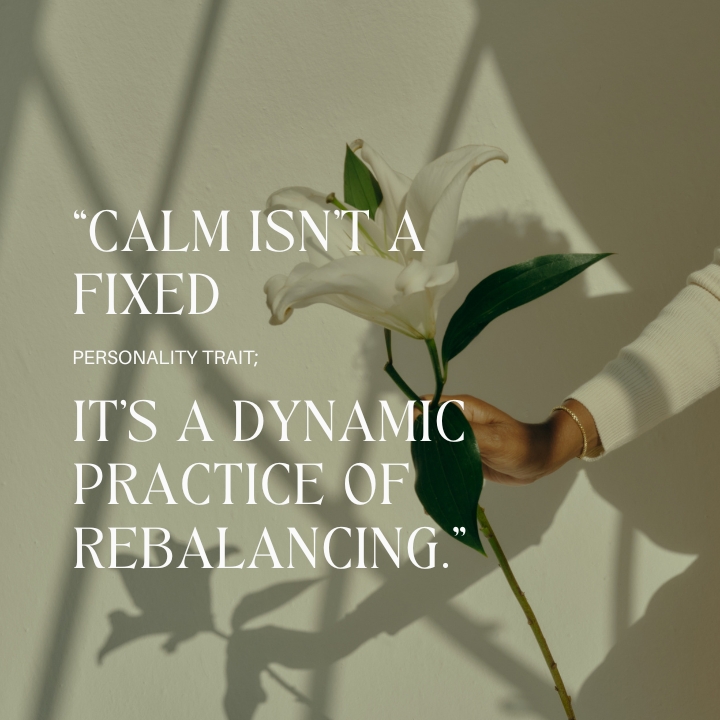
What is the most important piece of wisdom or encouragement you would offer to a woman in Hong Kong who feels that internal calm is an impossible goal?
GN: Calm isn’t a fixed personality trait; it’s a dynamic practice of rebalancing. If trying to achieve it alone isn’t working, that is not a failure — it’s a sign to ask for help. Get measured with your doctor, restore with a licensed TCM practitioner and let both systems support you. You do not have to choose one path; their synergy is your strength.
EK: Don’t force it. Pressure is the enemy of calm, and everyone’s version of ‘internal calm’ is unique. If something doesn’t feel right for you — be it yoga or a specific diet — don’t force yourself to conform. A state of internal calm is not about finding the perfect, one-size-fits-all formula for stress relief; it’s about permitting yourself to hear your own needs without overwhelming judgment. Get to know what you feel like in a state of safety, and honour the things, big or small, that contribute to it.
Read More: 14 Apps For Meditation, Mindfulness & Mental Health
Brought to you in partnership with TedxTinhau Women ‘Reframe 2025’. Images courtesy of Sassy Media Group and TedxTinhau Women.