 What's On HK


 Eat & Drink
 Travel

 Style
Style

 Beauty
 Health & Wellness

 Home & Decor

 Lifestyle
 Weddings

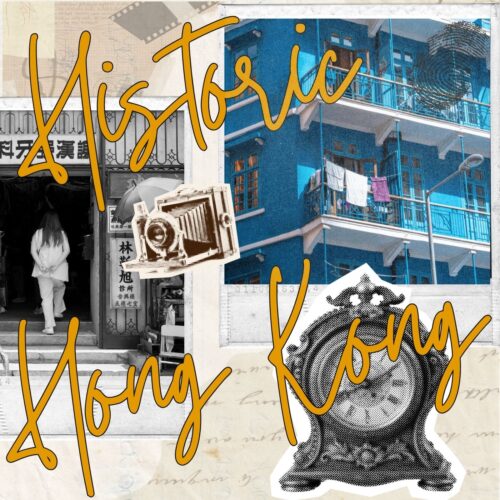
Looking for the perfect Hong Kong Instagram shot or a slice of history? Step back in time as you dine, drink, shop & tour these historical buildings, landmarks and old sites in Hong Kong, from the Blue House to PMQ!
Tick these off your Hong Kong bucket list! Our city is home to plenty of unique things to do, including visiting beautiful old buildings that are a real part of Hong Kong’s cultural heritage and history. Over the last few years, we’ve seen some of them come back to life — revitalised by the government and other community projects to become host to fine dining establishments, exhibition spaces, shopping destinations, cultural hubs and more. Ahead, we’re highlighting iconic spots and historic buildings in Hong Kong to visit now.
Read More: Hong Kong Hikes With History — The Best Historic Walking Trails
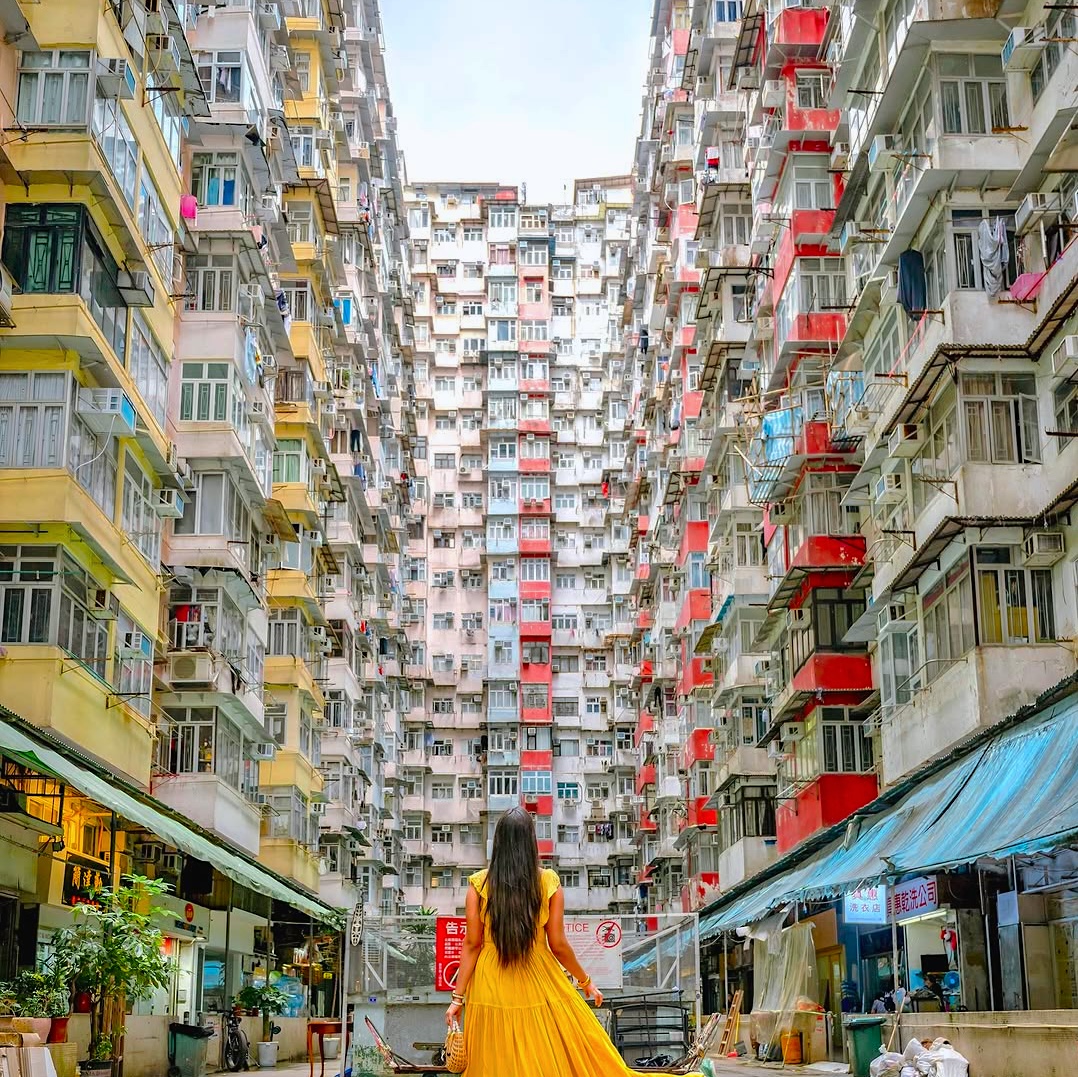
Yick Cheong “Monster” Builiding — Quarry Bay residential complex & most-Instagrammed spot in HK
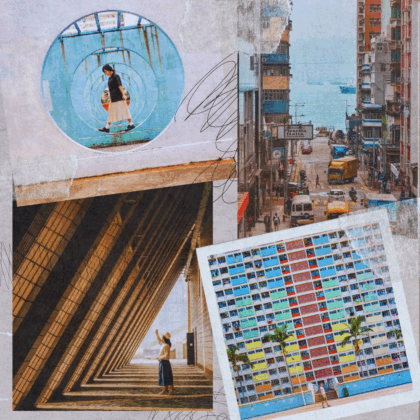
A striking example of Hong Kong’s dense urban living, this 1960s-era residental complex is a maze-like blend of five interconnected apartment blocks home to 10,000 residents. Known for its gravity-defying architecture and photogenic “frog-in-the-well” perspective, the Monster Building gained global fame after appearing in films like Transformers and Ghost in the Shell.
Where to eat: While the immediate area is residential, head to nearby Quarry Bay & Tai Koo for diverse dining options, from local cha chaan tengs to international cuisine. For a quick bite, try street food along King’s Road.
What to do: Capture the building’s imposing facade with a wide-angle lens (<35mm) for the best effect. For a unique shot, point your camera skyward to emphasise its towering density. Visit in the afternoon for balanced lighting or at night when the complex glows blue — just be mindful of residents, as this is an active housing estate.
Yick Cheong Building, King’s Road, Quarry Bay, Hong Kong
Read More: Quarry Bay & Tai Koo Eats, Sites & Hidden Gems
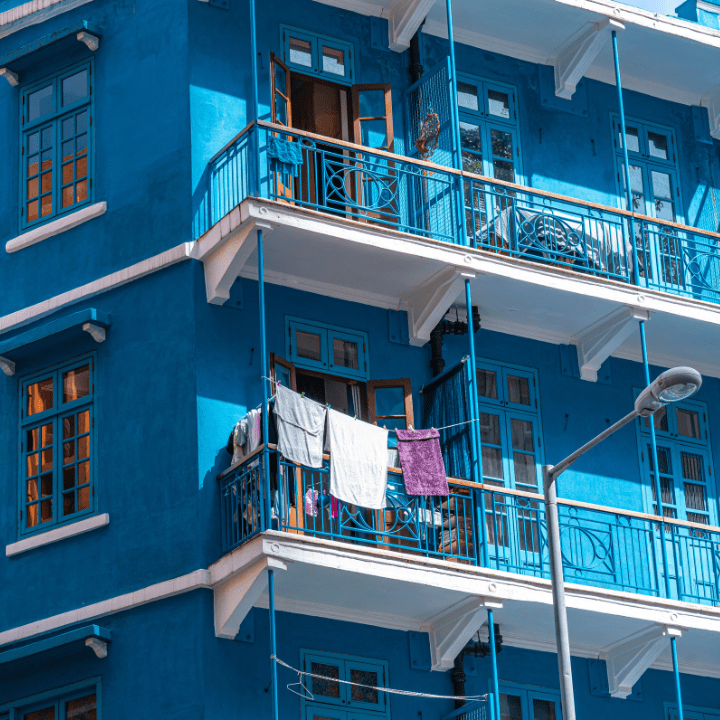
Blue House — Iconic painted tenement building in Wan Chai
A truly historic site, this four-storey building stands on what used to be a hospital, then a temple and finally four tenement blocks. One of the remaining “tong lau” style residential balcony-type tenement buildings in Hong Kong, the Blue House got its name (and colour!) in the 1990s when it was painted by the government. It’s now a Grade I historic building, meaning the government has designated it as one with “outstanding merit of which every effort should be made to preserve if possible“.
Where to eat: Samsen Wan Chai, located right next to Blue House on 68 Stone Nullah Lane, for boat noodle soup and other Thai favourites, or the neighbouring Banh Mi Nem for some authentic and delicious Vietnamese sandwiches!
What to do: Visit the Hong Kong House Of Stories (G/F), a museum aiming to bring the city’s culture and community to the forefront. It comprises two parts: a space dedicated to exhibitions and an area for handicrafts, where you can make your own souvenirs to take home.
Blue House, 72-74A Stone Nullah Lane, Wan Chai, Hong Kong
Read More: Your Neighbourhood Guide To Wan Chai
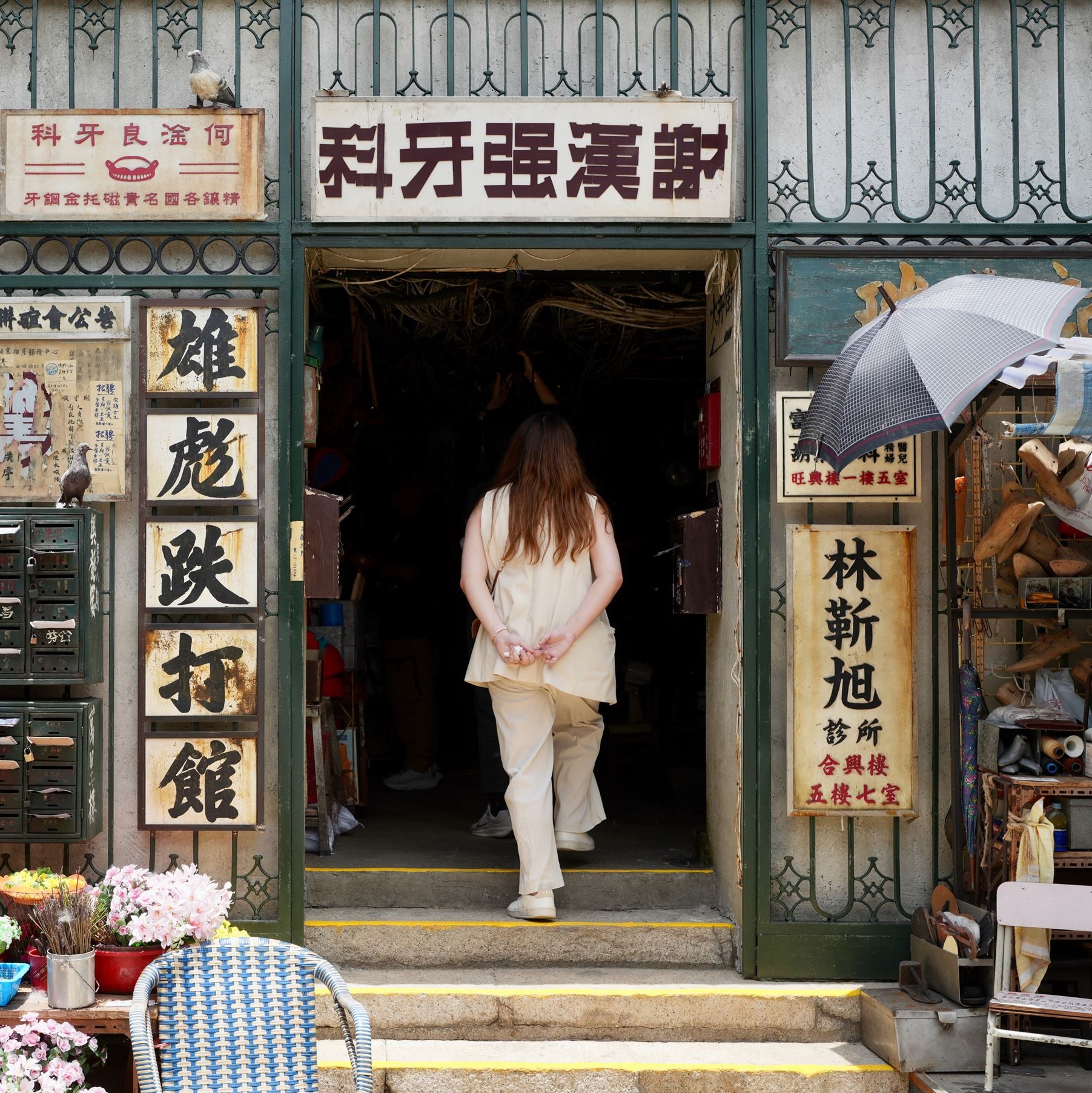
Kowloon Walled City Park — Hong Kong’s historic green oasis with replicas of historic architecture
Once the site of a notorious, densely packed urban slum in the 1980s, this serene park now preserves the memory of Kowloon Walled City while offering a peaceful retreat. Built on the ruins of the former lawless enclave (demolished in 1994), the park features Jiangnan-style gardens, remnants of the original Qing Dynasty fortifications and a bronze model showcasing the chaotic architecture of the lost city.
Where to eat: Kowloon City is known as “Little Thailand” — take a five-minute walk away to explore the neighbourhood and grab some authentic Thai cuisine!
What to do: After visiting the permanent “City of Thousand Faces” exhibit, featuring a detailed cross-section model of the former Walled City, explore the “Kowloon Walled City: A Cinematic Journey” exhibition (May 2025–2028), which boasts immersive movie sets from Twilight of the Warriors: Walled In, including recreated 1980s alleyways, shops and a rooftop projection of daily life.
Kowloon Walled City Park, Tung Tsing Road, Kowloon City, Kowloon, Hong Kong
Read More: Kowloon City — Your Ultimate Guide To Cafes, Restaurants & History
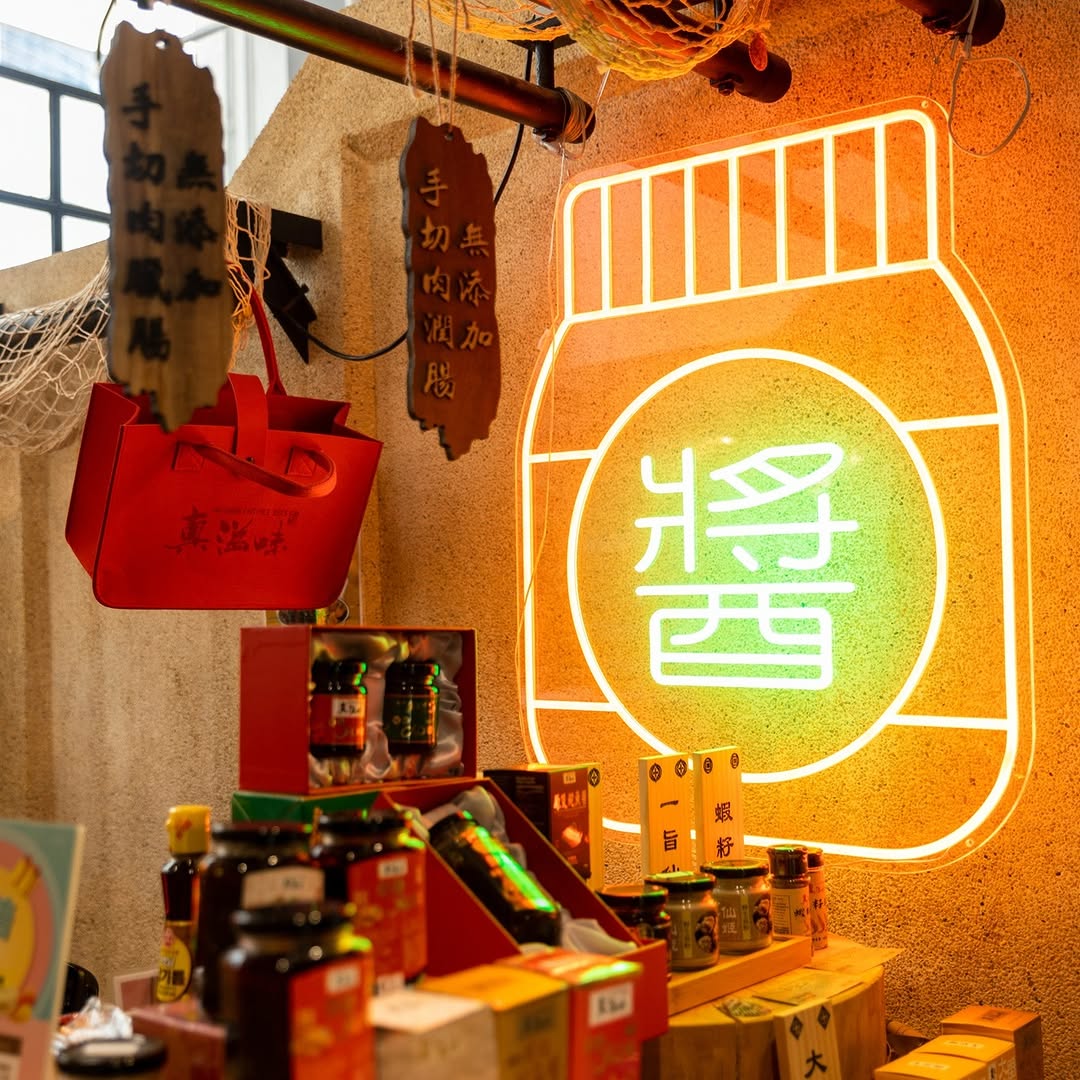
Central Market — Major food & trinket shopping connecting to IFC
Formerly a fresh food market – in fact the very first wet market in the city – this Bauhaus-style Grade III historic building (the government will attempt, if possible, to preserve it) was reopened to the public in 2021 as a special new centre. The revitalised Central Market boasts pop-ups and stalls, exhibition spaces, a food hall and more — all right in the heart of Hong Kong Island.
Where to eat: Anywhere in Street Food Central and the Dining Ground, which serves as a food court-hall of sorts across two floors. Enjoy beloved local treats at Mammy Pancakes (242B), Singapore cuisine at Pulau (G19), a casual drink at Stormies (G13-14) and more!
What to do: Browse the market-like stalls and stop by the exhibition space to see what’s on! We’re big fans of the farmer’s market-style Chef’s Market Fresh Grocer & Deli (G04-G09) and the large Slowood (231-233).
Central Market, 93 Queen’s Road Central, Central, Hong Kong, www.centralmarket.hk
Read More: A Guide To Central Market Restaurants, Cafes & Shops
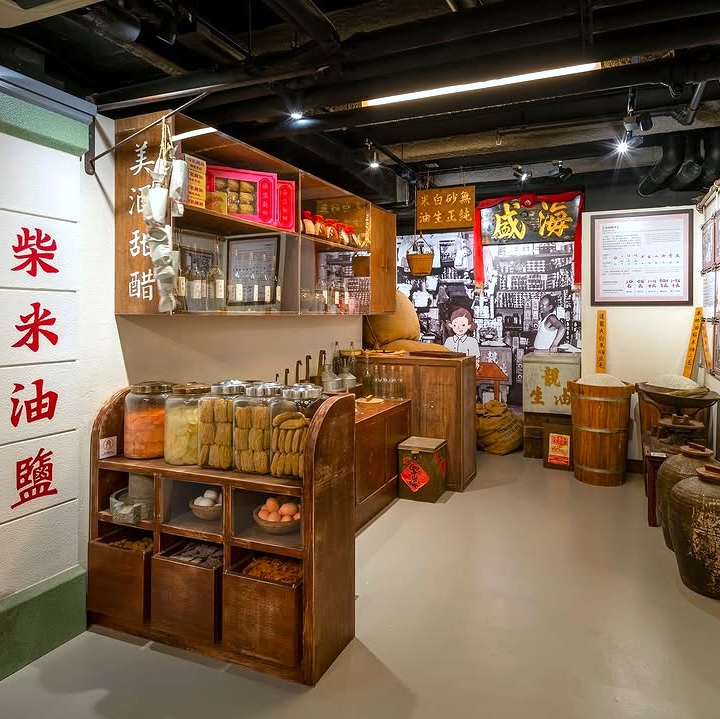
Mei Ho House — Grade II historic building in Sham Shui Po
This Grade II (efforts will be made to selectively preserve it) historic building has a tragic backstory — a devastating fire in December 1953 that left thousands homeless. To house the victims, the Colonial government built a 29-block resettlement estate on the site of the burnt-down shanties: Mei Ho House. After being revitalised in the 2000s, the building was transformed into a city youth hostel by the Hong Kong Youth Hostels Association.
Where to eat: Garden at Mei Ho Cafe for cafe-style eats (like pasta, burgers and salads) and plenty of coffee and drinks, or No Milkshake No Life- Morning Queue around the corner from Mei Ho House for some comfort American grub.
What to do: Visit the Heritage of Mei Ho House (HMHH) Museum! Its permanent exhibition “Memories of Our Days” is a beautiful look at Hong Kong’s history, starting in the 1950s up to the modern day, with installations and interactive experiences that’ll teach you about the history of Shek Kip Mei, the city’s housing policies and everyday life in the past.
Mei Ho House, Shek Kip Mei Estate, 70 Berwick Street, Sham Shui Po, Kowloon, Hong Kong
Read More: Your Neighbourhood Guide To Sham Shui Po
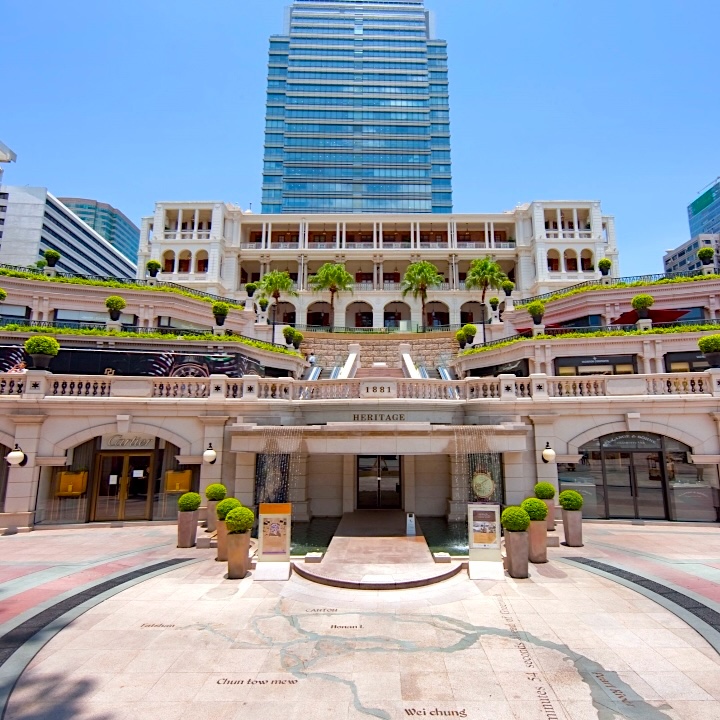
1881 Heritage — Historic landmark in Tsim Sha Tsui with themed dining
From the 1880s to 1996, this historical site served as the former headquarters of the Hong Kong Marine Police. A large portion of this compound has been declared a monument under the Antiquities and Monuments Ordinance since 1994, and was transformed into a cultural and shopping landmark, complete with a boutique hotel, restaurants and exhibition hall in the heart of Tsim Sha Tsui.
Where to eat: Mirroring the architectural style of historical Chinese private residences, The Queen reinvents classic Chinese delicacies across several regions using fresh seasonal produce.
Where to drink: Formerly the reporting room with three jail cells, the aptly named The Cell has an innovative cocktail menu inspired by the rich cultural background of its historical location.
What to do: Free guided tours of 1881 Heritage are conducted every day for those interested to learn more about its rich history. Call 2926 8000 to reserve a spot.
1881 Heritage, 2A Canton Road, Tsim Sha Tsui, Kowloon, Hong Kong, www.1881heritage.com
Read More: Where To Eat, Drink & Shop Tsim Sha Tsui
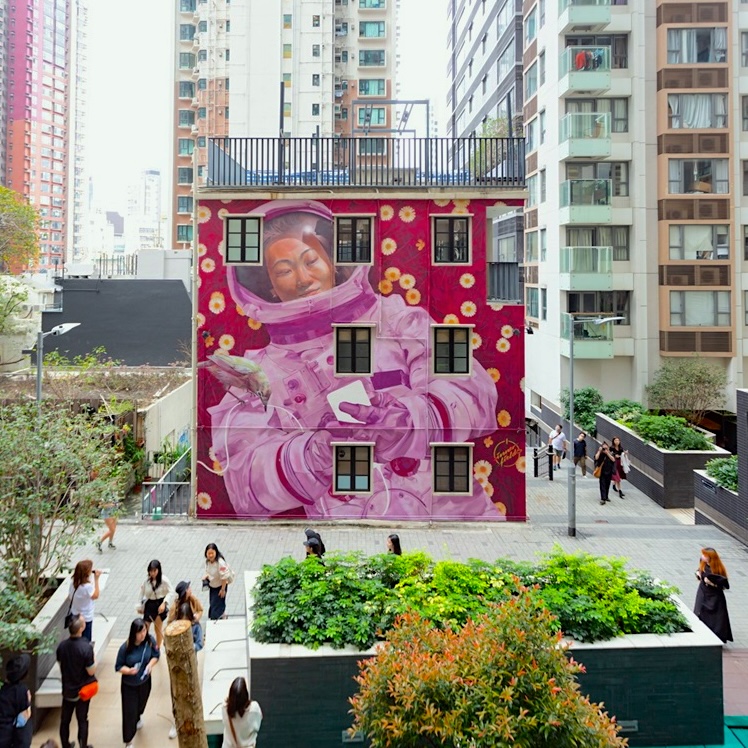
PMQ — Art-filled shopping and dining in Central filled with local Hong Kong brands
The historic site of the old Hollywood Road Police Married Quarters, PMQ was refurbished and renovated in 2014 — turning its residential units into small exhibition spaces, studios, shops and offices. This revitalised Grade III historic building is situated between Aberdeen Street, Staunton Street and Hollywood Road, and is the place to go for locally produced goods, trinkets, and knick-knacks. It also regularly hosts happenings and exhibitions, so make sure to keep up with its programmes.
Where to eat: Treat yourself to Michelin-starred French cuisine at Louise, set in a gorgeous two-storey 1930s colonial style building, and check out our full PMQ guide for more recommendations!
What to do: Tour the studios and shops! Choose a block and go floor by floor, door by door and you’ll find everything from delicate jewellery to neon room decor, ceramics, sustainable home products, cool apparel and more.
PMQ, 35 Aberdeen Street, Central, Hong Kong, www.pmq.org.hk
Read More: Y0ur Guide To PMQ Shops, Restaurants & More
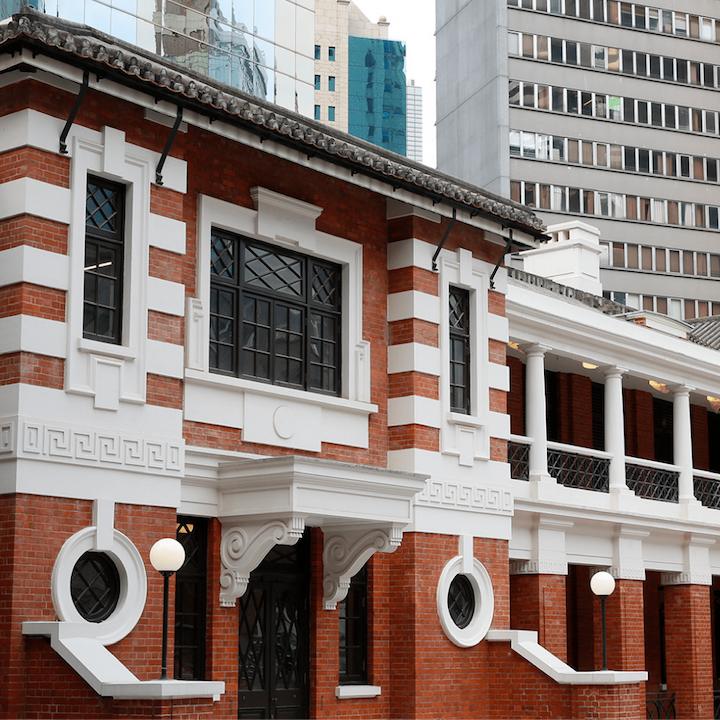
Tai Kwun — Former prison and police station with art exhibitions and outdoor dining
With over 150 years of history, it’s easy to step back in time as you explore the former Central Police Station and prison. Revitalised into a cultural and shopping destination, Tai Kwun is very much a centre for heritage and arts with plenty of historical exhibits, immersive art installations, audiovisual experiences and contemporary showcases.
Where to eat: It’s hard to pick just one! We’d steer you towards Madame Fu for incredible dim sum, brunch and afternoon tea — but check out our full Tai Kwun guide for more recommendations.
What to do: Come prepared! Check the website for the latest exhibitions and events and then head on over for free tours and interactive displays, special showcases and screenings, and even a peek inside the old jail cells.
Tai Kwun, 10 Hollywood Road, Central, Hong Kong, www.taikwun.hk
Read More: Tai Kwun Restaurants, Bars & Shops For The Ultimate Visit
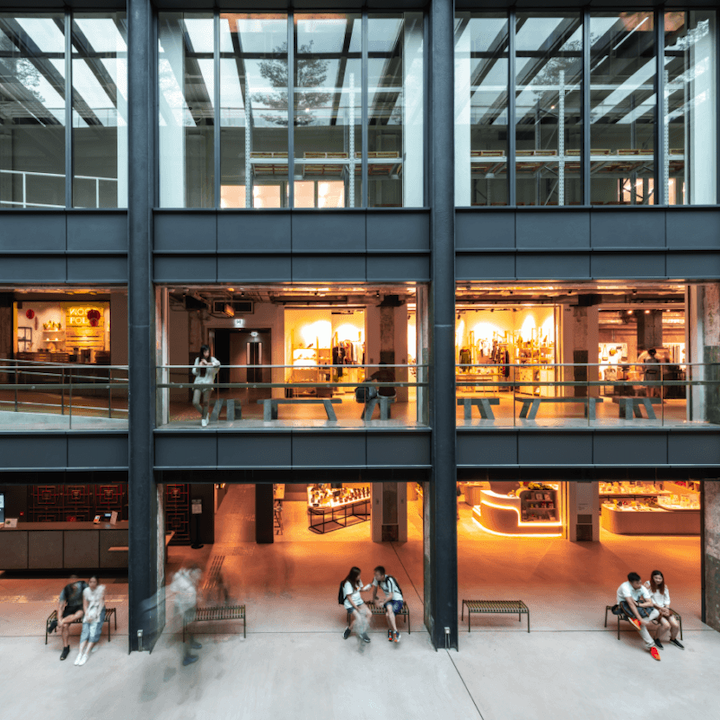
The Mills — Old Tsuen Wan textile factory transformed into a culture & innovation hub
A landmark revitalisation project, The Mills in Tsuen Wan is the result of transforming Nan Fung Textiles’ former cotton spinning mills into a beautiful pet-friendly space dedicated to sustainability and artistry. Here you’ll find heritage projects and conservation spaces, crafts, eateries and, of course, plenty of shops. It’s a little far out for those of us on the Island and south, but it’s worth a trek to see this part of Hong Kong’s history!
Where to eat: There are tons of fun eateries at The Mills, but we love the look of Fleur (G08), a flower-themed brunch diner with dishes covered in fresh, edible petals.
Where to drink: All the bars here are standouts, including Perfume Trees Gin’s distillery-tasting room-concept Tankyu Distillery (301) and KOKO Coffee Roasters (G09).
What to do: Browse all the lifestyle shops and check out the spaces dedicated to trades and crafts — like the Centre for Heritage, Arts and Textile’s CHAT Shop (G01A) and experimental impact retail store Fabrica X (108).
The Mills, 45 Pak Tin Par Street, Tsuen Wan, New Territories, Hong Kong, www.themills.com.hk
Read More: Inclusive Spaces & Communities In Hong Kong
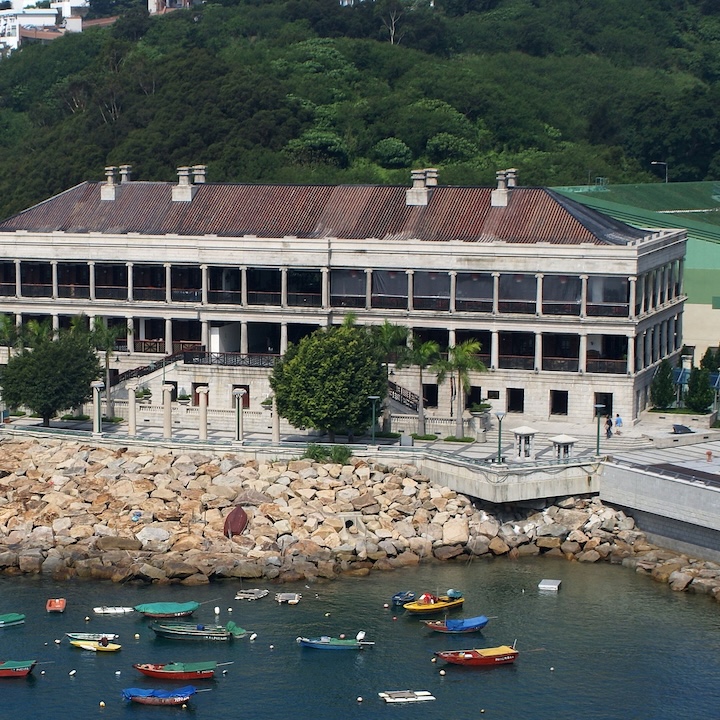
Murray House — 160-year-old historic colonial landmark in Stanley
The beautiful Murray House is more than a seaside destination! This 175-year-old restored Victorian-era building was originally located in Central, before being dismantled and moved to Stanley. Its history includes being an officers’ quarters of the Murray Barracks, being occupied by the Japanese during WW2 and believed to be haunted, the site of two public exorcism ceremonies!
Where to eat: Head to Spiaggia, a Asian-Western fusion restaurant for fresh seafood right by the water. For quick bites, Bakehouse offers delicious pastries just steps away.
What to do: Stroll along Blake Pier for perfect photo opportunities of the waterfront, or browse the nearby Stanley Market for unique souvenirs. Don’t miss the building’s grand colonnades — a favourite spot for wedding photos.
Murray House, 96 Stanley Main Street, Stanley, Hong Kong
Read More: 5 Haunted Locations To Visit In Hong Kong

Tai O Heritage Hotel — Lantau heritage site and former police station
Located a fair way away from the downtown hustle and bustle, this gorgeous colonial-style boutique hotel is located in the heart of Tai O Fishing Village and overlooks the seemingly endless South China Sea horizon. A heritage site reformed from the 1902 Tai O Police Station, this coastal-meets-colonial venue is the perfect respite after a day exploring Lantau side.
Where to eat: The hotel’s glass-roofed restaurant, Tai O Lookout, features a menu that features locally made produce such as Tai O’s famous shrimp paste, Mountain Begonia, salted fish and preserved eggs.
What to do: Tai O Heritage Hotel is open to the public for free visits from 11am to 6pm, with three guided tours conducted daily.
Tai O Heritage Hotel, 1 Shek Tsai Po Street, Tai O, Lantau Island, Hong Kong, www.taioheritagehotel.com
Read More: Your Guide To Tai O Fishing Village
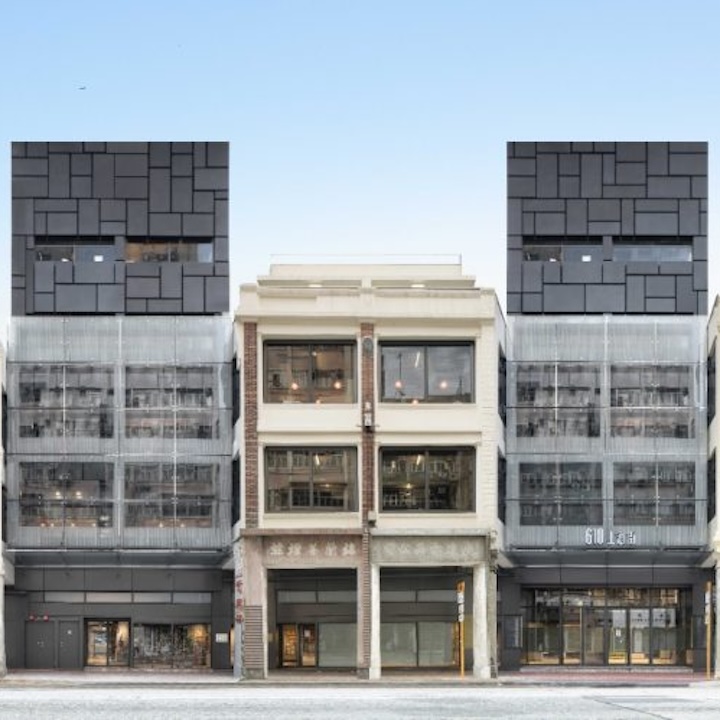
618 Shanghai Street — Revitalised historical buildings with shops & kitchenware
Formerly known as Station Street in the 1860s, Shanghai Street stretches across reclaimed land — one of the earliest streets to stand on what was once sea! By the 1920s, the street became a bustling shopping area and transportation hub with ferry piers and boat-dwellers at either end. You could find anything from kitchenware and home goods to Chinese herbal tea shops, silk and satin, goldsmiths, pawnshops and Buddhist statues. Today, 618 Shanghai Street is a revitalised cluster of historical tenement buildings located from 600 to 626 Shanghai Street, with plenty of local and independent brands, secondhand stores and eateries to browse.
618 Shanghai Street, 618 Shanghai Street, Mong Kok, Kowloon, Hong Kong, 618shanghaistreet.com
Read More: The Best Of Shanghai Street: Kitchenware, 618 Shopping & More
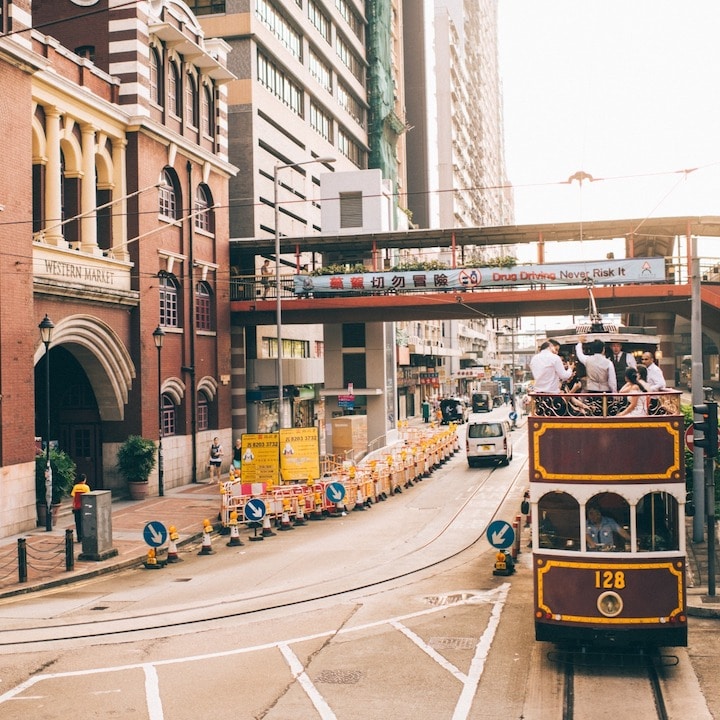
Western Market — Red-brick heritage building and shopping
A historic gem, this Edwardian-style building is the city’s oldest surviving market structure, dating back to 1906. Originally part of a larger complex (the South Block was demolished in 1981), its striking red-brick facade with “bandaged” corner towers and granite arches reflects Queen Anne Revival architecture. The bustling wet market was revitalised in 1991 and now houses fabric shops, craft stores and eateries, although it’s slated for renovation in 2025 and will face temporary closure.
Where to eat: Queen Street Cooked Food Market is a Hong Kong staple with multiple local eateries houses inside!
What to do: We love the fabric shops on the 1st floor, where merchants sell silk, chiffon and other textiles — a legacy of Sheung Wan’s “Cloth Street”! With Western Market closed for renovations, though, it’s unclear how many of these iconic historic shops will survive.
Western Market, 323 Des Voeux Road Central, Sheung Wan, Hong Kong
Read More: Where To Eat Like A Local In Central & Sheung Wan
Main image courtesy of Sassy Media Group, image 1 courtesy of @travelwithcg, all other images courtesy of the respective establishments and sites.